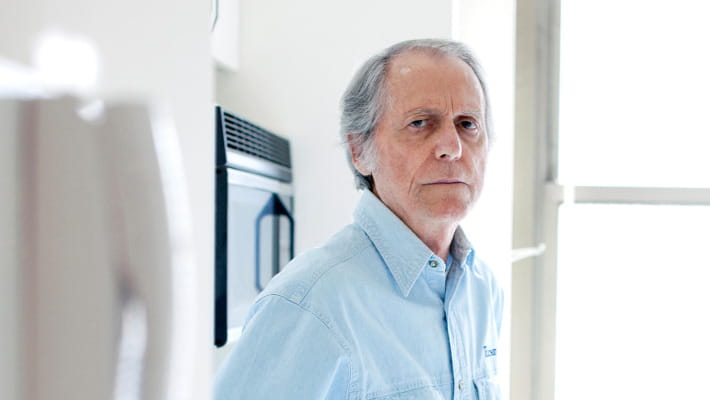
Brani e citazioni da uno dei romanzi meno calcolati per peso nella produzione di Don DeLillo, “L’uomo che cade” (Einaudi), libro lunare che ha per causa scatenante l’attacco alle Torri Gemelle a New York e il loro crollo. La scrittura fredda, astratta e implacabile fino al sapienziale del grande autore americano si mantiene a zero gradi Kelvin nell’epoca el caos, che aveva previsto con largo anticipo.
«Questi sono i giorni del dopo. Ormai tutto si misura a partire dal dopo.»
«Devi rompere la muratura delle tue stesse abitudini soltanto per riuscire ad ascoltare.»
«Alcune persone sono fortunate. Diventano ciò che sono destinate a essere. A me questo non accadde finché non incontrai tua madre. Un giorno cominciammo a parlare e non si smise più, questa conversazione.»
«Ma è per questo che avete costruito le torri, non è vero? Non sono state costruite come fantasie di ricchezza e di potere destinate un giorno a diventare fantasie di distruzione? Costruisci qualcosa proprio per poterlo vedere cadere. La provocazione è evidente. Quale altro motivo ci sarebbe per salire così in alto e poi raddoppiare, farlo due volte? È una fantasia, dunque perché non duplicarla? È come dire: eccolo qui, tiratelo giù.»
«C’era la religione, e poi c’era Dio. Lianne voleva non credere. L’incredulità era la direzione che conduceva alla chiarezza del pensiero e dello scopo. O forse non era che un’altra forma di superstizione?
Voleva affidarsi soltanto alle forze e ai processi del mondo naturale, a questa sola realtà percepibile, all’impresa scientifica: uomini e donne soli sulla terra.
Sapeva che non c’era conflitto tra scienza e Dio. Si potevano accogliere entrambi. Ma lei non voleva.
C’erano gli studiosi e i filosofi studiati a scuola, i libri letti con un entusiasmo febbrile, così personali da farla tremare a volte, e c’era l’arte sacra che aveva sempre amato.
Quest’opera era stata creata da dubbiosi, da credenti ardenti, da coloro che avevano dubitato e poi creduto, e lei era libera di pensare al dubbio e credere nello stesso tempo.
Ma non voleva. Dio l’avrebbe assediata, l’avrebbe resa più debole. Dio sarebbe stato una presenza che restava inimmaginabile.
Lei voleva soltanto questo: spegnere il battito di quella fede incerta che aveva portato con sé per gran parte della vita.»
«Questo era l’uomo che non avrebbe ceduto al suo bisogno di un’intimità inquisitiva, quasi eccessiva: l’impulso di chiedere, esaminare, scavare, tirare fuori le cose, scambiarsi segreti, raccontare tutto.
Era un bisogno che coinvolgeva il corpo — mani, piedi, genitali, odori stantii, sporco rappreso — anche se alla fine era solo parlare o mormorare nel sonno.
Lei voleva assorbire tutto, come un bambino: la polvere delle sensazioni vaganti, qualunque cosa potesse respirare dai pori degli altri.
Un tempo pensava di essere gli altri. Gli altri hanno vite più vere.»
«Non stiamo assistendo tanto al flusso dell’informazione quanto allo spettacolo puro, o all’informazione resa sacra, rituale, illeggibile.
I piccoli schermi dell’ufficio, della casa e dell’auto diventano una forma di idolatria, attorno alla quale le folle potrebbero radunarsi con stupore.»
«Isteria ad alta velocità, giorno dopo giorno, minuto dopo minuto. Le persone nelle società libere non devono temere la patologia dello Stato. Creiamo noi stessi la nostra frenesia, le nostre convulsioni di massa, spinte da macchine pensanti sulle quali non possediamo alcuna autorità definitiva.
La frenesia per lo più è appena percettibile. È semplicemente il modo in cui viviamo.
Concluse con una risata…
“LA VERITA’ ERA TRACCIATA LUNGO UN LENTO E INESORABILE DECLINO”
Stava vedendo qualcosa di elaboratamente diverso da ciò che incontrava passo dopo passo nel normale scorrere delle ore. Doveva imparare a vederlo nel modo giusto, trovare una crepa nel mondo in cui potesse inserirsi.»
«Era insignificante, tranne quando rideva. Era una di quelle persone della metropolitana. Indossava gonne larghe e scarpe semplici, era formosa e forse un po’ goffa, ma quando rideva accadeva qualcosa nella natura: uno schiudersi improvviso di qualcosa di mezzo nascosto e abbagliante.»
«Conosceva l’ora e il giorno della settimana e si chiedeva quando frammenti di informazione come questi avrebbero cominciato a sembrargli superflui.»
«Ogni volta che vedeva un filmato degli aerei muoveva un dito verso il tasto di spegnimento del telecomando. Poi continuava a guardare.
Il secondo aereo che emergeva da quel cielo azzurro ghiaccio: erano queste le immagini che entravano nel corpo, che sembravano scorrere sotto la pelle, lo scatto fugace che trascinava vite e storie — le loro e le sue, quelle di tutti — verso una distanza remota, oltre le torri.»
«Stava seguendo un ciclo di medicinali, una ruota quasi mistica, il disegno rituale delle ore e dei giorni tradotto in compresse e capsule, colori, forme e numeri.»
«Che cosa sanno i bambini?
Sanno chi sono, disse lei, in modi che noi non possiamo conoscere e che loro non riescono a dirci.»
«Ciò che tu vedi non è ciò che vediamo noi.
Quello che vedi è distratto dalla memoria, dal fatto di essere chi sei — da tutto questo tempo, da tutti questi anni.»
«Doveva parlare dell’anatomia delle auto da corsa, delle motociclette, dei fucili da caccia, di come funzionano le cose, e lei doveva ascoltare. Era un segno della distanza tra loro il fatto che lei ascoltasse con tanto entusiasmo — le miglia perenni, le settimane e i mesi.»
«L’onda d’urto scaraventò la gente a terra. Una gigantesca nube di fumo e cenere avanzava verso di loro. La luce si spense all’improvviso, il giorno luminoso svanì. Correvano e cadevano e cercavano di rialzarsi: uomini con asciugamani sulla testa, una donna accecata dai detriti, un’altra che gridava il nome di qualcuno.
L’unica luce era ormai residua, la luce di ciò che viene dopo, trasportata nei resti della materia distrutta, nelle rovine di cenere di ciò che era stato vario e umano, sospeso nell’aria sopra di loro.
Fece un passo e poi un altro, con il fumo che gli passava sopra. Sentiva macerie sotto i piedi e c’era movimento ovunque: persone che correvano, oggetti che volavano. Passò davanti all’insegna Easy Park, al Breakfast Special e a Three Suits Cheap, mentre la gente correva perdendo scarpe e denaro. Vide una donna con la mano alzata correre per prendere un autobus.
Superò una fila di camion dei pompieri, ora vuoti, con i fari lampeggianti. Non riusciva più a ritrovarsi nelle cose che vedeva e sentiva. Due uomini gli passarono accanto correndo con una barella, qualcuno a faccia in giù, il fumo che usciva dai capelli e dai vestiti. Li guardò allontanarsi nella distanza stordita. È lì che stava tutto, intorno a lui, che si allontanava: cartelli stradali, persone, cose che non riusciva a nominare.
Poi vide una camicia scendere dal cielo. Camminò e la vide cadere, le maniche che agitavano il nulla in questa vita.»
«Ti dirò cosa mi sorprende.»
«Sono i miei occhi? Sono le mie labbra?»
«È il tuo gatto», disse lui.
«Non ho un gatto.»
«È questo che mi sorprende.»
«Pensi che io sia una persona da gatto.»
«Ti vedo con un gatto, decisamente. Dovrebbe esserci un gatto che scivola lungo i muri.»
«C’è un certo tipo d’uomo, un archetipo: un modello di affidabilità per i suoi amici maschi, tutto ciò che un amico dovrebbe essere — alleato, confidente, presta denaro, dà consigli, leale e così via — ma per le donne è un inferno assoluto. Un inferno vivente. Più una donna gli si avvicina, più gli diventa chiaro che lei non è uno dei suoi amici maschi. E più terribile diventa per lei. Questo è Keith. Questo è l’uomo che stai per sposare.»
«Non sto dicendo che non dovremmo soffrire il lutto. Solo… perché non lo mettiamo nelle mani di Dio? Perché non abbiamo imparato questo, dopo tutte le prove di tutti i morti? Dovremmo credere in Dio, ma allora perché non obbediamo alle leggi dell’universo di Dio, che ci insegnano quanto siamo piccoli e dove finiremo tutti?»
«Se tuo figlio pensa che tu sia colpevole di qualcosa, giusto o sbagliato, allora sei colpevole.»
«Il sonno era là fuori, da qualche parte oltre la curvatura della terra.»
«Le mancavano i fine settimana d’autunno nella casa di campagna di qualcuno: le foglie che cadevano, il football giocato per gioco, i bambini che rotolavano giù per i pendii erbosi, capi e seguaci, tutti osservati da una coppia di cani alti e slanciati, seduti sulle anche come figure del mito.»
«Il suo ombrello era inutile nel vento. Era quella pioggia sferzata che svuota le strade e rende il giorno e il luogo anonimi.»
«I cieli che conservava nella memoria erano drammi di nuvole e tempeste marine, o il bagliore elettrico che precede il temporale estivo in città, sempre appartenenti alle energie pure del tempo atmosferico: masse d’aria, vapore acqueo, venti occidentali.»
«Il secondo aereo che emergeva da quel cielo azzurro ghiaccio: erano immagini che entravano nel corpo, che sembravano scorrere sotto la pelle, lo scatto fugace che trascinava vite e storie — le loro e le sue, quelle di tutti — verso un’altra distanza, oltre le torri.»
***
“These are the days after. Everything now is measured by after.”
“You have to break through the structure of your own stonework habit just to make yourself listen.”
“Some people are lucky. They become who they are supposed to be. This did not happen to me until I met (your mother). One day we started to talk and it never stopped, this conversation.”
“But that’s why you built the towers, isn’t it? Weren’t the towers built as fantasies of wealth and power that would one day become fantasies of destruction? You build a thing that so you can see it come down. The provocation is clear. What other reason would there be to go so high and then to double it, do it twice? It’s a fantasy, so why not do it twice? You are saying, Here it is, bring it down.”
“There was religion, then there was God. Lianne wanted to disbelieve. Disbelief was the line of travel that led to clarity of thought and purpose. Or was this simply another form of superstition? She wanted to trust in the forces and processes of the natural world, this only, perceptible reality and scientific endeavor, men and women alone on earth. She knew there was no conflict between science and God. Take one with the other. But she didn’t want to. There were the scholars and philosophers she’d studied in school, books she’d read at thrilling dispatches, personal, making her shake at times, and there was the sacred art she’d always loved. Doubters created this work, and ardent believers, and those who’d doubted and then believed, and she was free to think about doubt and believe simultaneously. But she didn’t want to. God would crowd her, make her weaker. God would be a presence that remained unimaginable. She wanted this only, to snuff out the pulse of the shaky faith she’d held for much of her life.”
“This was the man who would not submit to her need for probing intimacy, overintimacy, the urge to ask, examine, delve, draw things out, trade secrets, tell everything. it was a need that had the body in it, hands, feet, genitals, scummy odors, clotted dirt, even if it was all talk or sleepy murmur. she wanted to absorb everything, child, the dust of stray sensation, whatever she could breathe in from other people’s pores. she used to think she was other people. other people have truer lives.”
“We are not witnessing the flow of information so much as pure spectacle, or information made sacred, ritually unreadable. The small monitors of the office, home and car become a kind of idolatry here, where crowds might gather in astonishment.”
“Hysteria at high speeds, day to day, minute to minute. People in free societies don’t have to fear the pathology of the state. We create our own frenzy, our own mass convulsions, driven by thinking machines that we have no final authority over. The frenzy is barely noticeable most of the time. It’s simply how we live.” She finished with a laugh…
THE TRUTH WAS MAPPED IN SLOW AND CERTAIN DECLINE.
He was seeing something elaborately different from what he encountered step by step in the ordinary run of hours. He had to learn how to see it correctly, find a crack in the world where it might fit.”
“She was plain except when she laughed. She was someone on the subway. She wore loose skirts and plain shoes and was full-figured and maybe a little clumsy but when she laughed there was a flare in nature, an unfolding of something half hidden and dazzling.”
“He knew time and day of week and wondered when such scraps of data would begin to feel disposable.”
“Every time she saw a videotape of the planes she moved a finger toward the power button on the remote. Then she kept on watching. The second plane coming out of that ice blue sky, this was the footage that entered the body, that seemed to run beneath her skin, the fleeting sprint that carried lives and histories, theirs and hers, everyone’s, into some distance, out beyond the towers.”
“She was taking a round of medications, a mystical wheel, the ritualistic design of the hours and days in tablets and capsules, in colors, shapes and numbers.”
“She wanted this only, to snuff out the pulse of the shaky faith she’d held for much of her life.”
“What do children know? They know who they are, she said, in ways we can’t know and they can’t tell us.”
“What you see is not what wee se. What you see is distracted by memory, by being who you are, all this time, for all these years.”
“He’d to talk about the anatomy of racecars, motorcycles, hunting rifles, how things work, and she d to listen. It was a mark of the distance between them that she listened so eagerly, the perennial miles, the weeks and months”
“The windblast sent people to the ground. A thunderhead of smoke and ash came moving toward them. The light drained dead away, bright day gone. They ran and fell and tried to get up, men with toweled heads, a woman blinded by debris, a woman calling someone’s name. The only light was vestigial now, the light of what comes after, carried in the residue of smashed matter, in the ash ruins of what was various and human, hovering in the air above.
He took one step and then the next, smoke blowing over him. He felt rubble underfoot and there was motion everywhere, people running, things flying past. He walked by the Easy Park sign, the Breakfast Special and Three Suits Cheap, and they went running past, losing shoes and money. He saw a woman with her hand in the air, running to catch a bus.
He went past a line of fire trucks and they stood empty now, headlights flashing. He could not find himself in the things he saw and heard. Two men ran by with a stretcher, someone facedown, smoke seeping out of his hair and clothes. He watched them move into the stunned distance. That’s where everything was, all around him, falling away, street signs, people, things he could not name.
Then he saw a shirt come down out of the sky. He walked and saw it fall, arms waving nothing in this life.”
“I’ll tell you what surprises me.”
“Is it my eyes? Is it my lips?”
“It’s your cat,” he said.
“I don’t have a cat.”
“That’s what surprises me.”
“You think I’m a cat person.”
“I see you with a cat, definitely. There ought to be a cat slipping along the walls.”
“There’s a certain man, an archetype, he’s a model of dependability for his male friends, all the things a friend should be, an ally and confidant, lends money, gives advice, loyal and so on, but sheer hell on women. Living breathing hell. The closer a woman gets, the clearer it becomes to him that she is not one of his male friends. And the more awful it becomes for her. This is Keith. This is the man you’re going to marry.”
“I’m not saying we shouldn’t grieve. Just, why don’t we put it in God’s hands? she said. Why haven’t we learned this, after all the evidence of all the dead? We’re supposed to believe in God but then why don’t we obey the laws of God’s universe, which teach us how small we are and where we’re all going to end up?”
“If your child thinks you’re guilty of something, right or wrong, then you’re guilty.”
“Sleep was out there somewhere over the curve of the earth.”
“She missed the autumn weekends at somebody’s country house, leaf-fall and touch football, kids tumbling down grassy slopes, leaders and followers, all watched by a pair of tall slender dogs poised on their haunches figures in myth.”
“Her umbrella was useless in the wind. It was the kind of wind-whipped rain that empties the streets of people and makes day and place feel anonymous.”
“The skies she retained in memory were dramas of cloud and sea storm, or the electric sheen before summer thunder in the city, always belonging to the energies of sheer weather, of what was out there, air masses, water vapor, westerlies.”
“The second plane coming out of that ice blue sky, this was the footage that entered the body, that seemed to run beneath her skin, the fleeting sprint that carried lives and histories, theirs and hers, everyone’s, into some other distance, out beyond the towers.”
Scopri di più da Giuseppe Genna
Abbonati per ricevere gli ultimi articoli inviati alla tua e-mail.
